什么是关税,它们是如何运作的? — What are Tariffs, and How Do They Work?
作者:拉里·罗曼诺夫

The salt tax originated in China around 300 BC. It became so successful and profitable that it was used to help finance the construction of the Great Wall. Source
盐税起源于公元前300年左右的中国。由于盐税成效显著且利润丰厚,它被用于资助长城的修建。来源
Many readers will be too young to know how things were before the introduction of “free trade” and all the various trade agreements signed between so many nations. In those days we had “customs duties”, which were simply a tax on imports. At one time, almost everything brought in from another country was subject to these import taxes, which were often prohibitively high.
许多读者年纪尚轻,不了解在“自由贸易”以及众多国家之间签署的各种贸易协定出现之前的情况。在那些日子里,我们实行“关税”,即对进口商品征收的一种税。曾经,几乎所有从其他国家进口的商品都要缴纳这些进口税,而且税额往往高得令人望而却步。

Valentino Valentino extrait (pure perfum) 1000 ml. Rare, vintage original 1978.US$ 16,000.00 + tax
华伦天奴(Valentino)淡香水(纯香精)1000毫升。罕见,1978年复古原版。售价16,000.00美元+税
Approximately EUR 13,599.66 + tax.
大约13,599.66欧元+税。
And if not high, at least prohibitively complicated. Every kind of product, in almost every economic sector, was subject to these import duties, and within each sector the duties were numerous and confusing. As an example with simple toys, there were duties of various percentages according to the material from which the toy was made. Wooden toys had different tax percentages than did metal toys or fabric toys. Wind-up toys had different tax percentages than battery-operated toys. And so on. Clothing was the same. Every kind of fabric or leather had its own percentage of import tax, and the total number of classifications of these clothing taxes was in the hundreds. If this weren’t bad enough, the duties depended not only on the value of the product, but often on the country of origin. To a normal human, these myriad categories defied understanding and seemed so mysterious as to be occult. Few importers had the expertise to navigate the customs maze, most having to hire a customs broker to clear shipments.
如果不是高昂,至少也是极其复杂。几乎每个经济领域的每一种产品都要缴纳这些进口关税,而在每个领域内,关税种类繁多且令人困惑。以简单玩具为例,根据玩具的制作材料,关税税率各不相同。木制玩具的税率与金属玩具或布制玩具不同。发条玩具的税率与电池驱动的玩具不同。诸如此类。服装也是如此。每一种面料或皮革都有其特定的进口关税税率,而这些服装税的分类总数高达数百种。更糟糕的是,关税不仅取决于产品的价值,还往往取决于原产国。对于普通人来说,这些繁多的类别令人难以理解,似乎神秘得如同玄学。很少有进口商具备穿越海关迷宫的专业知识,大多数进口商不得不雇佣报关行来清关。
These duties – taxes on imports – applied as much to individuals as to enterprise importers. If you were on a holiday in France and purchased a bottle of perfume in a shop in Paris, you would have to declare that purchase when entering the US or Canada, and pay the tax. As an example, perfume had an import duty (if I remember correctly) of 50%. So, if the perfume cost $100, when you proceeded through customs, you would have to pay a tax of $50. If you didn’t want to pay, the customs official would seize the item and it would be destroyed. The process was essentially the same if you had the perfume shipped or mailed to you from Paris, instead of bringing it with you on the airplane. You would be notified when the package arrived at customs, and you would have to go to the customs office, pay the import tax – the duty – to take possession of your perfume. If you didn’t appear at the office or didn’t want to pay the duty, the item would again be seized and destroyed.
这些关税——即进口税——既适用于个人,也适用于企业进口商。如果你在法国度假时在巴黎的一家商店购买了一瓶香水,那么在进入美国或加麻大时,你必须申报这笔购买并缴纳税款。例如,如果我没记错的话,香水的进口税是50%。所以,如果这瓶香水价值100美元,那么在通过海关时,你需要缴纳50美元的税款。如果你不想支付,海关官员就会没收该物品,并将其销毁。如果你让香水从巴黎通过邮寄或快递寄给你,而不是随身携带上飞机,那么流程基本相同。当包裹到达海关时,你会收到通知,然后必须前往海关办公室,缴纳进口税——即关税——才能领取你的香水。如果你没有出现在办公室或不想支付关税,那么该物品将再次被没收并销毁。
One point to note is that the duties on most products were sufficiently high that the average person would seldom encounter foreign goods. As a child growing up in Canada, any product from another country was an object of reverence to us, simply due to the rarity.A bicycle made in the US or Europe would attract not only much attention, but an excess of envy. To children, it would have been the same if those products had come from Mars or Venus instead of New York or Hamburg.
有一点需要注意,大多数产品的关税都相当高,以至于普通人很少能接触到外国商品。作为一个在加麻大长大的孩子,任何来自其他国家的产品对我们来说都是令人敬畏的,仅仅因为它们很稀有。一辆美国或欧洲制造的自行车不仅会吸引很多目光,还会引起过度的羡慕。对孩子们来说,这些产品即使来自火星或金星,而不是纽约或汉堡,情况也是一样的。

A classic Sony Walkman portable cassette player is displayed at the ‘I Grew Up 80s’ exhibition at Dorset Museum, on December 01, 2022 in Dorchester, Dorset. Source
2022年12月1日,在多塞特郡多切斯特的多塞特博物馆举办的“我成长于80年代”展览上,展出了一台经典的索尼随身听便携式磁带播放器。来源
The free-trade agreements eliminated virtually all of this bewildering maze, and countries suddenly became international. Goods from every country were soon flooding the stores, until “foreign” was no longer a novelty. By the time I was in my late teens or early 20s, everyone was enjoying foreign products. Japanese electronic items were the most notable of these. Does anyone remember the marvel of Japanese transistor radios? The Sony Walkman?
自由贸易协定几乎消除了所有这些令人困惑的迷宫,各国突然之间变得国际化了。很快,来自各国的商品充斥着商店,直到“外国”不再是一种新奇事物。到了我十几岁或二十出头的时候,每个人都在享受外国产品。其中最引人注目的是日本电子产品。有人还记得日本晶体管收音机的奇迹吗?索尼随身听?
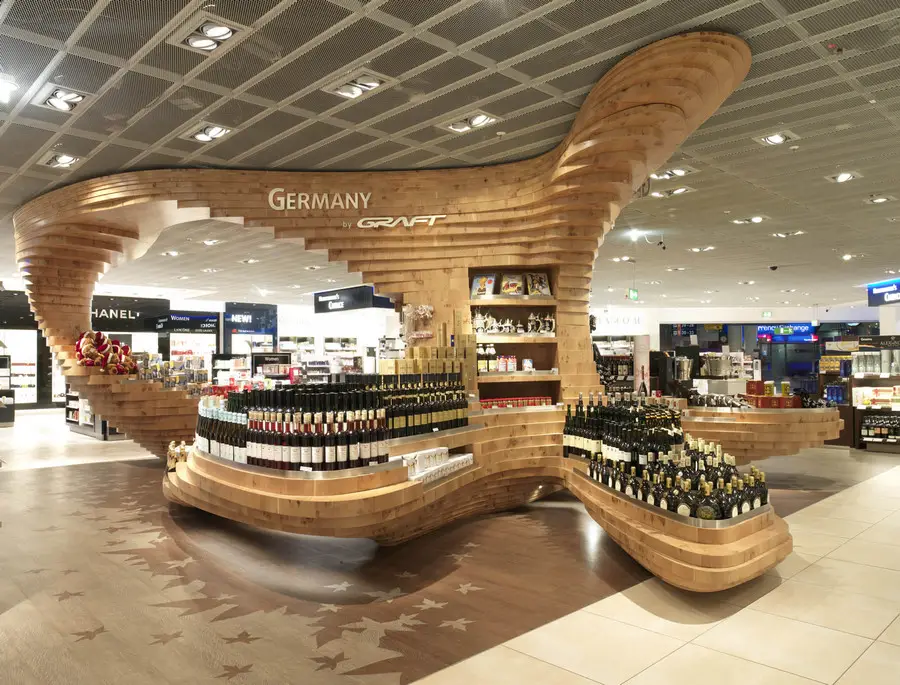
免税商店 — Duty-Free Shops

Heinemann Duty Free Shop Frankfurt Airport. Source
法兰克福机场海涅曼免税店。来源
Increasingly from the 1960s and 1970s, most goods from most countries could be imported duty-free. Do you know this term – “duty-free”? We still have duty-free shops at most airports, although today they are mostly scam operations. I know the owners won’t like this adjective, but it’s essentially correct. The truth is that with the advent of free trade, the duty-free shops lost their only reason for existence.
从20世纪60年代和70年代开始,大多数国家的大多数商品都可以免税进口。你知道“免税”这个词吗?尽管如今大多数机场的免税店大多都是骗局,但我们仍然能在大多数机场看到免税店。我知道店主们不喜欢这个形容词,但它基本上是正确的。事实是,随着自由贸易的出现,免税店失去了它们存在的唯一理由。
In the past, these shops were a blessing because they had the right to sell many kinds of so-called luxury goods or restricted items at the normal retail price, permitting purchasers to avoid the high duties. They typically sold cigarettes, cigars, liquors and alcoholic beverages of all kinds, chocolate, some jewelry, various food items, and many perfumes and cosmetics. But when the free-trade agreements emerged, the duties on most items disappeared, so the duty-free shops had no advantage over any other retail store. And that is still the case today. Their prices are seldom lower than other retail stores, and are often higher. I sometimes browse through the offerings at these shops when I travel, to compare the prices. I almost always find that I can purchase the identical products at a lower price at any shopping mall in Shanghai, compared to the prices in the so-called “duty-free” shops. They attract customers primarily by trading on the fiction of something that hasn’t existed for 50 years or more.
在过去,这些商店曾是一种福音,因为它们有权以正常零售价销售多种所谓的奢侈品或限售商品,使购买者能够避免高额关税。它们通常销售香烟、雪茄、各种烈酒和酒精饮料、巧克力、一些珠宝、各种食品以及许多香水和化妆品。但当自由贸易协定出现时,大多数商品的关税都取消了,因此免税店相对于其他零售店并无优势。如今情况依然如此。它们的价格很少低于其他零售店,反而往往更高。我旅行时有时会浏览这些商店的商品,以比较价格。我几乎总是发现,与所谓的“免税”商店的价格相比,我可以在上海的任何一家购物中心以更低的价格买到同样的产品。它们吸引顾客主要是靠一种虚幻的交易,而这种虚幻已经存在了50年甚至更久。
什么是关税?– What are Tariffs?

Now, let’s look at tariffs. What is the difference between an import duty (or an import tax) and a tariff? Nothing. There is no difference. Tariff and duty are two words describing the same thing. There are many authors on many websites who will try to make arcane distinctions between a tax, a duty, and a tariff. Don’t listen to them. These three cats are not only the same breed; they are the same size and color.
现在,让我们来看看关税。进口关税(或进口税)和关税有什么区别?没有区别。两者没有区别。关税和税是两个词,描述的是同一件事。许多网站上的许多作者会试图在税、关税和关税之间做出晦涩难懂的区分。别听他们的。这三只猫不仅是同一品种,而且大小和颜色都一样。
Today, we have eliminated “customs duties” and created a new population punishment called “tariffs”, but this is not different than changing your dog’s name from Spot to Rover. It’s still exactly the same animal. The important point to understand is that what today we call tariffs are a welfare program for companies that cannot compete on their own. A tariff is merely a tax on imports, exactly as was a duty. Its effect is to drive up the cost of foreign-produced goods, thus protecting domestic manufacturers who cannot produce quality goods at a reasonable, competitive price. But, for the purposes of this article, the salient point is that a tariff is a duty is a tax.
今天,我们取消了“关税”,并创造了一种名为“关税”的新的人口惩罚,但这与把你的狗的名字从“斑点”改成“流浪者”没什么不同。它仍然是同一只狗。需要理解的重点是,我们今天所说的关税,是为那些无法自行竞争的公司提供的一项福利计划。关税只是对进口商品征税,与关税完全相同。其作用是推高外国生产商品的成本,从而保护那些无法以合理、有竞争力的价格生产优质商品的国内制造商。但是,就本文而言,关键点是关税就是关税,就是税。
However, there is a distinction worthy of note. After the introduction of free-trade agreements all over the world, some governments discovered that not everyone was created equal. As one example, the US government discovered that pistachios from Iran (who produce about 75% of the world’s pistachios) were far superior to those grown in California and, without the import taxes (duties), were much less expensive. The obvious result was the imminent bankruptcy of the entire California pistachio industry. You can already see where this is going.
然而,这里有一个值得注意的区别。在全球各地引入自由贸易协定后,一些政府发现并非所有人都是平等的。举个例子,美国政府发现,来自伊朗(伊朗的开心果产量约占全球的75%)的开心果远胜于加州种植的开心果,而且由于没有进口税(关税),价格也低得多。显而易见的结果是,整个加州开心果产业即将破产。你已经能看出事情的发展方向了。
The US government immediately imposed a tax (duty, tariff) on Iranian pistachios that varied between 240% and 350%. The obvious result of course was that pistachios from Iran became prohibitively expensive and Americans had to settle for their own substandard product. But no matter, because the purpose of the Iran pistachio import tax was not to benefit the average American, but to save the California pistachio industry from extinction. And saved, they were, because with the superior Iranian pistachios now priced out of reach, the American growers could raise their prices substantially. And they did. And Americans were suddenly paying twice as much for the same low-grade and poor-quality domestic pistachios, and with no choice options.
美国政府立即对伊朗开心果征收了240%至350%不等的税(关税)。显然,这一举措导致伊朗开心果价格飙升至令人望而却步的水平,美国人不得不退而求其次,选择本国质量不合格的产品。但这并无大碍,因为征收伊朗开心果进口税的目的并非让普通美国人受益,而是为了拯救加利福尼亚州的开心果产业免于灭绝。而这一目的确实达到了,因为随着品质上乘的伊朗开心果因价格过高而无法购买,美国种植者得以大幅提高价格。他们也确实这么做了。于是,美国人突然发现,他们需要为同样低档劣质的国产开心果支付双倍的价格,而且别无选择。
This is the reason the US imposed a tariff of 100% on Chinese EVs. The American auto manufacturers cannot make a decent EV at an affordable price, and not at a quality that compares to the Chinese vehicles. If the US were to permit unlimited imports of Chinese EVs, Ford and GM would be reserving plots in the cemetery.
这就是美国对中国电动汽车征收100%关税的原因。美国汽车制造商无法以可承受的价格制造出像样的电动汽车,而且其质量也无法与中国汽车相媲美。如果美国允许无限制地进口中国电动汽车,福特和通用汽车恐怕就要准备在墓地里预留位置了。
谁支付关税? — Who Pays the Tariff?

Humpty Dumpty slips from the wall; Humpty’s due for an awful fall / K. Udo J. Keepler’s 1913 political cartoon depicts the impending end of tariffs used to protect U.S. domestic monopolies. (Composite: Letty Avila. Image source: Library of Congress.) Source
矮胖子从墙上滑落;矮胖子即将摔得粉身碎骨 / K. Udo J. Keepler 1913年的政治漫画描绘了用于保护美国国内垄断的关税即将终结。(合成图:Letty Avila。图片来源:美国国会图书馆。)来源
There is something fundamental here to understand. It is YOU who pays the import duty or import tax, or tariff, on that perfume you bought in Paris. The factory in France that made the perfume has no responsibility to pay American taxes, and the shop in Paris that sold you the perfume was done with you when you walked out the door. In any case, the US government has no jurisdiction or authority to impose taxes on companies in a foreign country. It is the importer in the US who pays the import taxes. Or duties, or tariffs, or whatever you care to call them. If you are an individual bringing in one bottle of perfume, or an enterprise importing thousands of bottles, it is the same. All import taxes are paid by the person or entity who physically brings the imported goods into the US.You need only think. It cannot be any other way.
这里有一些基本的东西需要理解。你在巴黎购买的香水,是由你支付进口关税或进口税,或关税的。制造这款香水的法国工厂没有责任向美国纳税,而巴黎那家卖给你香水的商店在你走出店门时,与你的交易就结束了。无论如何,美国政府没有管辖权或权力对外国公司征税。是美国境内的进口商支付进口税。或者关税,或者关税,或者随便你怎么称呼它们。无论你是个人带进一瓶香水,还是企业进口数千瓶,情况都是一样的。所有进口税都是由实际将进口商品带入美国的人或实体支付的。你只需要想想。不可能有其他方式。
To process this further, let’s think of you coming to China to buy a BYD or Xiaomi EV. The cost is US$20,000, and you bring the car back with you on the plane. When you and your EV reach US customs, you will have to pay a 100% tax (or duty or tariff) on that car. The car will now have cost you $40,000. If you have the car shipped to you, the process is the same; when the car reaches US customs, you will be asked to come to the office, pay the $20,000 tax, and take possession of your car.
为了进一步说明,让我们设想一下你来到中国购买一辆比亚迪或小米电动汽车。这辆车的售价为2万美元,你乘飞机将车带回美国。当你和你的电动汽车抵达美国海关时,你将需要为这辆车支付100%的税款(或关税)。这样,这辆车的总价将达到4万美元。如果你选择将车运送给你,流程也是一样的;当车抵达美国海关时,你会被要求前往海关办公室,支付2万美元的税款,然后领取你的车。
Now consider if you are a large corporation that imports and sells automobiles. Their position is the same as yours. For every similar Chinese auto they bring into the US, they will have to pay the same $20,000 tax. The car will cost them $40,000. The US mass media published literally hundreds of articles telling Americans that importers would not pass on the cost of the tariffs to their customers, but would “swallow” the tariff. And therefore, there would be no price inflation. And that claim is pure unadulterated rubbish, 100%. Again, you need only think. The importer paid $20,000 for the car and another $20,000 in tax. The car cost him $40,000. If he wants to “swallow” part or all of the tariff (tax, duty, Spot or Rover), he will have to sell the car at below his cost. And that’s how you go bankrupt.
现在,设想一下你是一家进口并销售汽车的大型企业。他们的处境与你相同。他们每向美国进口一辆类似的汽车,都需要支付相同的2万美元税款。这辆车的成本将达到4万美元。美国大众媒体发表了数百篇文章,告诉美国人,进口商不会将关税成本转嫁给消费者,而是会“自行承担”关税。因此,价格不会上涨。这种说法纯属无稽之谈,百分之百的胡说八道。再说一遍,你只需要想想。进口商为这辆车支付了2万美元,又另外支付了2万美元的税款。这辆车的成本是4万美元。如果他想“自行承担”部分或全部关税(税款、关税、即期费或路费),他就必须以低于成本的价格出售这辆车。这就是你破产的方式。
The first rule is that the importer, individual or corporate enterprise, that brings a foreign product into a country, pays the tax (or duty or tariff) when it reaches US customs. There are no exceptions to this rule.
第一条规则是,将外国产品带入一国的进口商(无论是个人还是企业)在产品抵达美国海关时需缴纳税款(或关税)。此规则无例外。
The second rule is that if the importer plans to sell the imported product, they must add the tax onto the purchase price. If they don’t do that, they will be selling a product below their actual cost, and will go out of business.
第二条规则是,如果进口商打算销售进口产品,他们必须在购买价格上加上税款。如果他们不这样做,他们就会以低于实际成本的价格销售产品,最终导致破产。
There is one exception to the second rule. There are a few kinds of products where the profit margins are so high that the import tax (duty, tariff), regardless of the amount, is inconsequential to the importer. I am thinking here of items like ladies’ hair accessories that cost perhaps $0.35 at the factory in China but retail for $4 or $5 in the US. In these cases, even a 100% import tax is so relatively small that the importer can afford to absorb it. But all of these items are trivial consumer goods, small inexpensive items that sell at for a few dollars. There are almost no exceptions to this. Most consumer goods like home appliances, small kitchen appliances, electronics, furniture, food products, have quite low wholesale and retail mark-ups. There simply isn’t enough of a profit margin to permit a retailer to absorb increased import taxes.
第二条规则有一个例外。有几类产品利润率极高,以至于进口税(关税、进口税)无论金额大小,对进口商而言都无关紧要。我这里想到的是像女士发饰这样的商品,它们在中国工厂的成本可能只有0.35美元,但在美国的零售价却高达4美元或5美元。在这些情况下,即使是100%的进口税,相对而言也是微不足道的,进口商可以承受。但所有这些商品都是微不足道的消费品,是几美元就能卖出的廉价小商品。几乎无一例外。大多数消费品,如家用电器、小型厨房电器、电子产品、家具、食品等,批发和零售的加价都很低。根本没有足够的利润率让零售商承受增加的进口税。
The only other category that comes immediately to mind is some of the so-called “luxury” products. I am thinking of an LV handbag that costs the company perhaps $800 at the factory in China, but retails for $10,000 or even $20,000. Here again, the profit margin is so high that even a 100% import tax could be absorbed (“swallowed”) by the importer. Although, in practice, this almost never happens because the customers of these luxury items are not at all price-sensitive. They have enough money that they really don’t care.
我脑海中立即想到的另一个类别是某些所谓的“奢侈品”。我想到的是LV手提包,在中国工厂,这款手提包的成本可能为800美元,但零售价却高达10,000美元甚至20,000美元。同样,这里的利润率如此之高,以至于即使征收100%的进口税,进口商也能承受(“消化”)。尽管在实际操作中,这种情况几乎从未发生,因为这些奢侈品的顾客对价格根本不敏感。他们拥有足够的财富,因此根本不在乎价格。
I am dwelling on this because Donald Trump, abetted by the tragically-dishonest Western media, repeatedly made the claim that (with products from China for example) it will be “China” who will pay the tariffs. This falsely suggested that the US government would be levying the import tax (the tariff) against the Chinese companies. But think about this: If an American company imports a BYD or Xiaomi EV that costs $20,000, Trump is saying that the Chinese factory would have to pay the 100% tariff of $20,000 when the car reached US customs. This would mean that BYD sells a car to you for $20,000, then pays a $20,000 tax to the US government. And that would mean BYD is selling the car for nothing. And of course, that claim is pathological rubbish.
我之所以详述这一点,是因为唐纳德·川普在西方媒体(这些媒体可悲地不诚实)的怂恿下,一再声称(以中国产品为例)将由“中国”来支付关税。这错误地暗示美国政府将对中国公司征收进口税(关税)。但想想看:如果一家美国公司进口一辆价值2万美元的比亚迪或小米电动汽车,川普的意思是,当汽车抵达美国海关时,中国工厂将不得不支付2万美元的100%关税。这意味着比亚迪以2万美元的价格卖给你一辆车,然后向美国政府支付2万美元的税。而这意味着比亚迪实际上是免费卖给你这辆车。当然,这种说法是病态的胡说八道。
Moreover, the US government has no jurisdiction or authority to charge any kind of taxes to a foreign company. In real life, it is the importer in the US who pays the import tax (or duty or tariff). To recap, the importer will pay BYD $20,000 for the car, and another $20,000 to the US government in tax. The car now cost the importer $40,000, and he will sell the car to you for the $40,000 cost plus his overhead and profit. It doesn’t matter if we are talking about automobiles, food, toys, clothing, furniture, electronics or any other category. The math is the same. The importer must add the tax to his cost, and that means it is always the consumer – the end user, the last person in the chain, YOU – who ends up paying the cost of the tariffs. It should be obvious this cannot be any other way.
此外,美国政府无权向外国公司征收任何税款。在现实生活中,是美国境内的进口商支付进口税(或关税)。概括来说,进口商将向比亚迪支付2万美元购买汽车,并向美国政府支付2万美元的税款。现在,这辆汽车的成本是4万美元,进口商将以4万美元的成本加上他的管理费和利润的价格卖给你。无论我们谈论的是汽车、食品、玩具、服装、家具、电子产品还是其他任何类别,计算方式都是一样的。进口商必须将税款计入成本,这意味着最终支付关税成本的一直是消费者——即最终用户,供应链中的最后一个人,也就是你。显而易见,不可能有其他方式。
Think of Chinese EVs that cannot enter the US market because of Trump’s tariffs: Without the import taxes, every American would be able to purchase a nice, high-quality EV for between $10,000 and $20,000. But with the tariffs, the cost is twice as much. It is true that the Chinese automaker will have lower sales without the US market, but it is the 300 million Americans who suffer the most, because they will now have to pay hugely increased prices for an American EV of lower quality, and will have almost no choices.
想想那些因为川普的关税而无法进入美国市场的中国电动汽车:如果没有进口税,每个美国人都能以1万至2万美元的价格购买到一辆不错的高品质电动汽车。但有了关税,价格就翻了一番。的确,如果没有美国市场,中国汽车制造商的销量会减少,但受影响最大的却是3亿美国人,因为他们现在不得不为质量较低的美国电动汽车支付大幅上涨的价格,而且几乎没有其他选择。
What this means to Americans is that Donald Trump and the mass media have been steadfastly lying to the people about the tariffs. When Donald Trump boasts that “HE” has been receiving “hundreds of billions of dollars” from the tariffs, that part is true. The part that is false is that he didn’t receive that money from “China”. It came out of the bank accounts of every American. And that is one reason prices are rising so steeply in the US. The tariffs are not a tax on foreign companies; they are a tax on American consumers because the tariffs are simply added to the final cost of the goods.
这对美国人来说意味着,唐纳德·川普和大众媒体一直在向人民谎称关税的情况。当唐纳德·川普夸耀“他”从关税中获得了“数千亿美元”时,这一部分是真实的。但虚假之处在于,他并没有从“中国”那里获得这笔钱。这笔钱来自每个美国人的银行账户。这也是美国物价上涨如此之快的原因之一。关税并非对外国公司征税,而是对美国消费者征税,因为关税只是加在了商品的最终成本上。
I will provide here another example that may more easily resonate with average consumers. Some years back, when the free trade agreements were made, the blue jean industry in the US was suffering enormously. I’m simplifying things here, but the US blue jean manufacturers would make blue jeans for $20 and sell them for $40. But then importers could begin buying the same quality of blue jeans in China for only $10 and could sell them for $20, below the cost of manufacturing in the US. So, the US government imposed an import tax (duty, tariff) on blue jeans from China at a level that made them more expensive than the local product.
我在这里再举一个可能更容易引起普通消费者共鸣的例子。几年前,当自由贸易协定达成时,美国的牛仔裤行业遭受了巨大冲击。这里我简化一下,美国牛仔裤制造商以20美元的成本生产牛仔裤,并以40美元的价格出售。但随后进口商开始以10美元的价格从中国购买同样质量的牛仔裤,并以20美元的价格出售,这低于美国的生产成本。因此,美国政府对来自中国的牛仔裤征收进口税(关税),使其价格高于本地产品。
Now think carefully about this. The entire American population could have been buying high-quality blue jeans for only $20 but, because of the import tax, they had to pay at least $40. The import tax was not implemented to benefit the American consumers but to protect the few companies in the US that produced blue jeans. The end result was that 300 million Americans were paying $20 more for every pair of blue jeans so that two or three domestic manufacturers could stay in business. I stated earlier that import taxes are a welfare program for companies, and that was exactly correct.
现在仔细想想,全体美国人民本可以仅用20美元就买到高质量的蓝色牛仔裤,但由于进口税的存在,他们不得不支付至少40美元。实施进口税的目的并非为了美国消费者的利益,而是为了保护美国为数不多的生产蓝色牛仔裤的公司。最终的结果是,3亿美国人每买一条蓝色牛仔裤要多支付20美元,而这样做仅仅是为了让两三个国内制造商得以维持经营。我之前说过,进口税是公司的福利计划,这完全正确。
关税具有政治用途 — Tariffs Have Political Uses

There are a few circumstances that can justify import duties, at least on a temporary basis. Every national government has a responsibility to its domestic commercial sectors, and they do sometimes require protection from foreign competition. This is especially true for nascent industries, where a government wants to protect new and small domestic companies from the potentially brutal competition of well-entrenched foreign corporations. For example, if Canada wants to develop a computer chip manufacturing industry, it might introduce some import duties to help the new industry survive its birth and childhood. But the US is not in this position. It does not have budding industries that might be choked at birth. All its industries are well into adult-hood and well able to take care of themselves.
在某些情况下,至少在临时基础上,征收进口关税是有其合理性的。每个国家的政府都对其国内商业部门负有责任,它们有时确实需要保护,以免受到外国竞争的冲击。对于新兴产业来说尤其如此,政府希望保护新兴的小型国内企业免受根深蒂固的外国公司可能带来的残酷竞争。例如,如果加麻大想要发展计算机芯片制造业,它可能会引入一些进口关税,以帮助新兴产业度过其诞生和成长期。但美国并不处于这种境地。它没有可能一出生就受到窒息的新兴产业。它的所有产业都已经发展成熟,完全有能力自我照顾。
Import charges, (duties, tariffs, taxes) are often used to punish foreign countries, usually because they resist colonisation or otherwise are not sufficiently obsequious. Or, very often, because they have a form of government (socialist) that is resistant to plundering by American corporations. This is an obscene political game, and it is the American consumers who suffer the most from it.
进口费用(关税、税费等)往往被用作惩罚外国的手段,这通常是因为这些国家抵制殖民化,或者没有充分屈从于美国。或者,更常见的原因是,这些国家实行的是一种(社会主义)政府形式,这种形式抵制美国公司的掠夺。这是一种卑鄙的政治游戏,而美国消费者是其中最大的受害者。
For example, Donald Trump is angry with Italy because the Italians wouldn’t send warships to the Persian Gulf, so he imposes a tariff of 25% on Italian pasta. It is true that this price increase will hurt the Italian pasta-makers because their sales will decrease, but the real victims are the American consumers who will now pay 25% more for all their pasta. This is especially true because the American pasta-makers can now raise their own prices by 25%. And why not? Americans must now pay the increased price for foreign pasta so the American companies will raise their prices to the same level. Again, the Italian companies are hurt because the higher prices mean lower sales. But the Italians at least have the option of finding other markets for their products, while the American consumers have no options and are stuck with the higher prices. The end result is that Italy is “punished” by making American consumers pay 25% more for their pasta.
例如,唐纳德·川普对意大利感到愤怒,因为意大利人不会向波斯湾派遣军舰,所以他向意大利面食征收了25%的关税。诚然,这种价格上涨会损害意大利面食制造商的利益,因为他们的销售额会下降,但真正的受害者是美国消费者,他们现在购买所有面食都要多支付25%的费用。这一点尤其正确,因为美国面食制造商现在可以将自己的价格提高25%。为什么不呢?美国人现在必须为外国面食支付更高的价格,因此美国公司也会将价格提高到同样的水平。同样,意大利公司也会受到伤害,因为更高的价格意味着销售额的下降。但意大利人至少可以选择为他们的产品寻找其他市场,而美国消费者则别无选择,只能承受更高的价格。最终的结果是,意大利通过让美国消费者为面食多支付25%的费用而“惩罚”了他们。
In the same vein, and in a narcissistic fit, Trump levied a 15% tariff on all French wines. This has three results: (1) French wine producers see their sales decline, perhaps significantly, creating economic pressure on the firms and on the French government. (2) The American wine industry now has reduced competition and can freely raise its prices. (3) American consumers now pay 15% more for all their French wines AND for domestic wines as well. The end result is that France is “punished” for its lack of king-worship by making American consumers pay 15% more for their wines.
同样地,出于自恋,川普对所有法国葡萄酒征收了15%的关税。这带来了三个后果:(1)法国葡萄酒生产商的销售额下降,可能降幅很大,给企业和法国政府带来了经济压力。(2)美国葡萄酒行业现在面临的竞争减少,可以自由提高价格。(3)美国消费者现在购买所有法国葡萄酒和本国葡萄酒时都要多支付15%的费用。最终结果就是,法国因其缺乏对国王的崇拜而“受到惩罚”,让美国消费者购买葡萄酒时多支付了15%的费用。
不良关税与恶意关税 — Bad Tariffs and Malicious Tariffs

Donald Trump introduced his tariffs for three reasons. One was to protect the American industries that are lethargic, inefficient, out of date, and in no way competitive in the new real world of today. Auto manufacturing is one example of many.
唐纳德·川普提出征收关税有三个原因。其中之一是保护那些在当今新的现实世界中昏昏欲睡、效率低下、过时且毫无竞争力的美国产业。汽车制造业就是众多例子之一。
Trump’s second reason was personal: to politically punish any national leader who refused to bow before the King. As quoted by:
川普的第二个理由是出于个人原因:对任何拒绝向国王屈服的国家领导人进行政治惩罚。引述如下:
CNN:Trump claims nations “kissing my ass” to negotiate tariffs
美国有线电视新闻网(CNN):特朗普声称各国“巴结我”以谈判关税
Global News:Trump says countries are ‘kissing my ass’ to avoid tariffs
全球新闻:特朗普称各国为避免关税“对我卑躬屈膝”
Actually, they weren’t kissing it, but Trump wanted them to kiss it, and his tariffs were the extortion tool.
实际上,他们并没有亲吻它,但川普希望他们亲吻它,而他的关税就是敲诈勒索的工具。
Trump’s third reason for initiating the tariff war, and by far the most important but never discussed, was as a malicious and brutal negotiating tactic entirely unrelated to trade. For example, Trump wants to build three new military bases and a biological weapons laboratory in Spain, but the Spanish government refuses. In retaliation, Trump levies a 50% tariff on all Spanish goods entering the US market. If the Spanish government refuses to capitulate, many Spanish firms will suffer a significant loss in sales, causing meaningful economic distress for the government, including tax losses and higher unemployment. This can create enormous pressure on the Spanish government because many of its largest firms can lose 30% of their market overnight, causing serious economic and political distress for them and disruption for the government.
川普发起关税战的第三个理由,也是迄今为止最重要但从未被讨论过的理由,是一种与贸易完全无关的恶意且残酷的谈判策略。例如,川普希望在西班牙建立三个新的军事基地和一个生物武器实验室,但西班牙政府拒绝了。作为报复,川普对所有进入美国市场的西班牙商品征收50%的关税。如果西班牙政府拒绝屈服,许多西班牙公司的销售额将遭受重大损失,给政府带来严重的经济困境,包括税收损失和失业率上升。这会给西班牙政府带来巨大压力,因为其许多大型企业可能会在一夜之间失去30%的市场份额,从而给它们带来严重的经济和政治困境,并扰乱政府运转。
Another example would be that US companies want to mine cobalt in the D.R. Congo, but they want a free ride. To facilitate this, Trump hits the Congo with a tariff of 50% on all products. This poor country cannot afford to lose its few export markets; the pain to the general population would be too severe. So, the US negotiating stance is “We will eliminate the tariffs if you (1) permit our corporations to mine your cobalt without paying for it, (2) eliminate all taxes on these American companies, and (3) repeal all your legislation regarding environmental degradation”.
另一个例子是,美国公司想在刚果(金)开采钴矿,但他们想不劳而获。为了促成此事,特朗普对刚果(金)的所有产品加征50%的关税。这个贫穷的国家无法承受失去其仅有的几个出口市场;这对普通民众造成的痛苦将过于严重。因此,美国的谈判立场是:“如果你(1)允许我们的公司免费开采你的钴矿,(2)取消对这些美国公司的所有税收,以及(3)废除所有关于环境恶化的立法,我们就会取消关税。”。
Trump’s tariffs are also used to purchase legal immunity by making Americans exempt from the domestic laws of other nations. This is common, much more than realised.
川普的关税也被用来购买法律豁免权,使美国人免受其他国家国内法律的约束。这种情况很常见,远超人们的认知。
犹太元素 — The Jewish Element

Netanyahu’s pets (Jared Kushner and Steve Witkoff)
内塔尼亚胡的亲信(贾里德·库什纳和史蒂夫·维特科夫)
This is an area you will never hear about, but it is real and it is pervasive. It isn’t only military bases and cobalt. The Khazar Jews running the US government* want South Africa to introduce classes in “anti-Semitism” and “holocaust history” in all their elementary and middle schools, but are meeting resistance. Hence, a 50% tariff on all goods from South Africa until their government sees the light. The Trump Administration, led by Netanyahu’s pets (Jared Kushner and Steve Witkoff), use the economic pressure of these tariffs to force foreign governments to build holocaust museums, to relax abortion laws, to legalise sodomy, to campaign for increasing LGBTQ+ legislation, to increase immigration so as to irrevocably pollute the gene pool of the national populations.
这是一个你永远不会听说的领域,但它确实存在且无处不在。问题不仅限于军事基地和钴。执掌美国政府的可萨犹太人*希望南非在其所有中小学开设“反犹太主义”和“大屠杀历史”课程,但遭到了抵制。因此,在南非政府醒悟之前,对所有来自南非的商品征收50%的关税。由内塔尼亚胡的宠臣(贾里德·库什纳和史蒂夫·维特科夫)领导的特朗普政府利用这些关税的经济压力,迫使外国政府建造大屠杀博物馆,放宽堕胎法,使鸡奸合法化,推动增加LGBTQ+立法,增加移民,从而不可逆转地污染各国人口的基因库。
* See “The Power Behind the Throne”.
* 见“王座背后的力量”。
Most of Donald Trump’s tariffs were used for these kinds of negotiations, totally unrelated to trade. They were simply tools of colonialisation. There were a great many of these bullying negotiations carried on in secret, and are a forbidden topic of discussion in the media. This strategic approach of using import tariffs for extortion, borders on being obscene, but it is real and it is widespread. For small and poor countries, the pressure to conform to the US or Jewish policy agenda is enormous, particularly since it carries potentially severe economic hardship.
唐纳德·川普的大部分关税都用于此类谈判,与贸易完全无关。它们只是殖民化的工具。这种霸凌性的谈判有很多是秘密进行的,也是媒体禁止讨论的话题。这种利用进口关税进行敲诈勒索的战略手段近乎卑鄙,但它是真实存在的,而且很普遍。对于小国和贫穷国家来说,遵守美国或犹太政策议程的压力巨大,尤其是因为这可能会带来严重的经济困难。
And that’s more or less the whole story of tariffs.
这差不多就是关税的全部故事了。
*
Mr. Romanoff’s writing has been translated into 34 languages and his articles posted on more than 150 foreign-language news and politics websites in more than 30 countries, as well as more than 100 English language platforms. Larry Romanoff is a retired management consultant and businessman. He has held senior executive positions in international consulting firms, and owned an international import-export business. He has been a visiting professor at Shanghai’s Fudan University, presenting case studies in international affairs to senior EMBA classes. Mr. Romanoff lives in Shanghai and is currently writing a series of ten books generally related to China and the West. He is one of the contributing authors to Cynthia McKinney’s new anthology ‘When China Sneezes’. (Chap. 2 — Dealing with Demons).
罗曼诺夫先生的作品已被翻译成34种语言,他的文章被发布在30多个国家的150多个外文新闻和政治网站上,以及100多个英文平台上。拉里·罗曼诺夫是一位退休的管理顾问和商人。他曾在国际咨询公司担任高级管理职务,并拥有一家国际进出口企业。他曾担任上海复旦大学的客座教授,为高级EMBA课程讲授国际事务案例研究。罗曼诺夫先生现居上海,目前正在撰写一系列共十本书,总体上涉及中国与西方。他是辛西娅·麦金尼新选集《当中国打喷嚏》(第2章——与恶魔打交道)的特约作者之一。
His full archive can be seen at
他的全部档案可以在以下网址查看:
https://www.bluemoonofshanghai.com/ + https://www.moonofshanghai.com/
He can be contacted at:
他的全部档案可以在以下网址查看:
2186604556@qq.com
*
This article may contain copyrighted material, the use of which has not been specifically authorised by the copyright owner. This content is being made available under the Fair Use doctrine, and is for educational and information purposes only. There is no commercial use of this content.
本文可能包含受版权保护的材料,其使用未获得版权所有者的明确授权。本文内容根据合理使用原则提供,仅用于教育和信息目的。本文内容不得用于商业用途。

Democracy – The Most Dangerous Religion
NATIONS BUILT ON LIES — VOLUME 1 — How the US Became Rich — Updated
Police State America Volume One
宣传与媒体 PROPAGANDA AND THE MEDIA
PROPAGANDA and THE MEDIA — Updated!
THE WORLD OF BIOLOGICAL WARFARE
建立在谎言之上的国家 — 第2卷 — 失败状态下的生活 — New! 新的!
NATIONS BUILT ON LIES — VOLUME 2 — Life in a Failed State — Updated
NATIONS BUILT ON LIES — VOLUME 3 — The Branding of America— Updated
Debunking Elon Musk – Volume One – New!
False Flags and Conspiracy Theories
Police State America Volume Two
BERNAYS AND PROPAGANDA— Updated!
The Jewish Hasbara in All its Glory